
 LIFE WITH PETS, WELL CHOSEN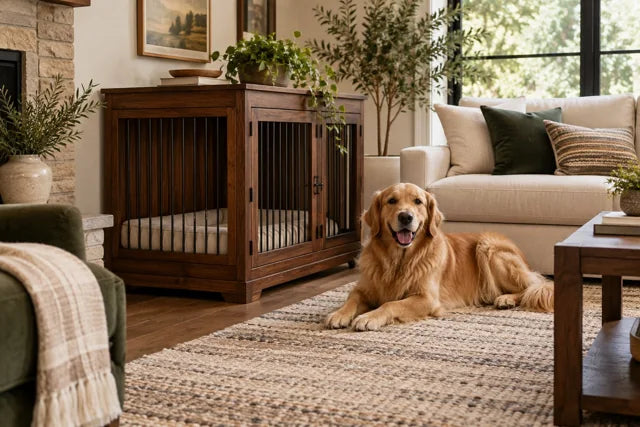

Article: How to Choose the Right Dog Bed: A Complete Guide to Comfort & Support
How to Choose the Right Dog Bed: A Complete Guide to Comfort & Support
 The Cakeen guide • Dog comfort
A better fit starts with the way your dog rests.
Learning how to choose a dog bed means looking beyond a Small, Medium or Large label. Watch where your dog settles, how much space they take up and whether they stretch out or lean against an edge. Those everyday details give you a useful starting point.
This guide brings size, sleeping style, support, materials and cleaning into one practical decision. Start with your dog's needs, then compare the construction and care details of the beds that fit.
Does Your Dog Really Need a Dog Bed?
A dedicated bed gives your dog a familiar resting spot and a cushioned alternative to the floor. It can also create a place to settle near the family without sharing the sofa, or make a suitably sized crate more comfortable.
Some dogs move between a bed and the floor. Let their preferences inform your choice rather than assuming one texture or shape suits every dog. For an older dog, pay particular attention to the surface and how easily they can get on and off it.
Start With How Your Dog Sleeps
Observe a few ordinary naps. Many dogs switch positions, so choose for the space they need when stretched out as well as their favorite curled-up pose.
01 • Room to stretch
The Sprawler
Legs out, body long, sometimes sleeping on their side: prioritize an open surface. A mattress-style bed leaves fewer edges in the way. Check both length and width against the dog's resting footprint.
02 • A snug resting place
The Curler
If your dog tucks into a circle, consider a bolster or cuddler. Compare the interior space inside the raised sides; the outside dimensions can make the bed look roomier than it is.
03 • Somewhere to lean
The Leaner
A dog that rests their head on a cushion or presses against the sofa may appreciate a raised edge. Look for an edge height they naturally use and an entry opening they can manage.
04 • A place to nest
The Burrower
If your dog noses into bedding, inspect nesting or cave-style designs. Check that the opening and interior leave room to turn and exit. A deep bolster offers edges to nest against, but does not provide the overhead cover of a cave bed.
For a concrete bolster example, the Orbit Memory Foam Bolster Bed ($120) has wraparound walls, memory foam and removable components for cleaning. Its listing describes crevices for nesting and head resting. Confirm the offered size and usable interior dimensions before choosing it.
How to Choose the Right Dog Bed Size
Measure Your Dog While They're Resting
- Wait until your dog is settled in a normal sleeping position.
- Measure the full space they occupy from end to end, including outstretched legs when relevant.
- Measure across the widest part of that resting position.
- Repeat when they stretch out. Record the larger measurements so the bed accommodates position changes.
- Compare those measurements with the bed's usable surface and the manufacturer's sizing guidance. Leave comfortable room around your dog rather than matching their outline exactly.
Compare Actual Bed Dimensions, Not Just Size Labels
“Large” is a label, not a shared measurement. Read length, width and height separately, and ask whether they describe the entire bed or the inner cushion. On a sofa bed, the full height can include the backrest; it does not tell you the thickness of the sleeping base.
What If Your Dog Is Between Sizes?
Favor enough usable space to stretch and turn, then check that the larger option still fits the room or crate. If your dog likes a snug edge, a suitably sized bolster may work better than simply buying the largest open mattress. For puppies, revisit measurements as they grow.
Common Dog Bed Sizing Mistakes
Do not rely only on breed, weight or a Large/XL label. Weight limits tell you something about intended use; they do not confirm that your dog's legs fit. Measure the sleeping position, account for raised sides, and check the floor space where the bed will go.
Types of Dog Beds and Who They're Best For
Orthopedic Dog Beds
Consider these when you want to compare supportive foam constructions. Read the layer descriptions and thicknesses. The word “orthopedic” alone does not establish how a bed performs for your individual dog.
Bolster and Sofa-Style Beds
Raised edges give curlers and leaners somewhere to rest against. The trade-off is less open sleeping space. Check the front opening as well as the cushion area.
The Orthopedic Dog Sofa Bed with Egg Crate Foam ($49) illustrates this shape: its listing specifies an egg-crate foam base, PP-cotton-filled rims, a low front and a removable machine-washable cover. Its 29.9 × 20.1 × 7.1-inch measurements are overall dimensions, so confirm the inner sleeping space for your dog.
Mattress and Pillow Beds
An open mattress offers freedom to stretch in different directions. Inspect the filling: a shaped foam mattress and a loose-filled pillow can feel quite different despite a similar outline. Ask how the filling is contained and whether it can shift.
Elevated Dog Beds
A raised fabric platform separates the sleeping surface from the floor and leaves space beneath it. Check frame stability, weight capacity, platform tension and entry height. This design offers a different feel from a padded mattress.
Donut and Cuddler Beds
These emphasize a soft, enclosed resting shape. They may appeal to curlers, but a plush rim is not a substitute for inspecting the base. Check how the cushion is filled and whether the whole bed fits your washing machine.
Cooling and Other Specialty Beds
Choose a specialty feature to address a specific need. For a warm resting spot, compare an open surface, cover fabric and any described cooling layer. A feature name alone cannot tell you the temperature your dog will experience.
| Bed type | Best fit to consider | Main benefit | What to inspect |
|---|---|---|---|
| Orthopedic foam | Dogs needing a more structured surface | Specified foam construction | Layers, base thickness and entry |
| Bolster / sofa | Curlers and leaners | Raised resting edge | Reduced interior area |
| Mattress / pillow | Sprawlers | Open space | Foam versus loose filling |
| Elevated | Dogs comfortable stepping onto a platform | Floor separation | Height, tension and capacity |
| Donut / cuddler | Dogs that nest into soft sides | Enclosed shape | Base structure and wash size |
| Cooling / specialty | A defined environment or preference | Targeted design feature | Actual mechanism and care |
Consider Your Dog's Age, Size and Individual Needs
Puppies
Prioritize manageable cleaning, inspectable seams and a size you can reassess as your puppy grows. If they pull at zippers or tear fabric, that habit matters more than the bed's appearance. Remove damaged bedding that exposes filling.
Adult Dogs
Use established habits as your guide. Note whether your dog seeks an edge, sprawls across the floor or carries dirt onto the bed after walks. Choose the features you will use every day.
Senior Dogs
Look closely at access and stability. A tall wall, slippery approach or deeply sinking cushion may be awkward for an individual dog. If pain, mobility changes or recovery needs are involved, ask your veterinarian about suitable bedding; a product label cannot replace that advice.
Large and Heavy Dogs
Compare both surface area and construction. A wide bed can still have a thin base. Ask for the intended weight range and details of the supporting layers rather than assuming “Jumbo” guarantees a fit.
The Jumbo Orthopedic Indoor/Outdoor Mattress ($80) has a listed 40 × 32 × 3-inch open design, egg-crate foam and a removable machine-washable cover. Those are useful comparison points for a sprawler; the name alone does not establish suitability for every large dog.
What Makes an Orthopedic Dog Bed Worth Considering?
Supportive Construction
Look for a clear explanation of the core. Is it solid foam, layered foam or loose filling? If several layers are listed, ask what each contributes and how the cover holds them in place.
Foam Quality and Thickness
Distinguish total bed height from actual foam thickness. “High-density” is more useful alongside a stated density or construction specification. When those details are absent, treat them as questions for the retailer, not proof of quality.
Stability Under Your Dog's Weight
Check the stated weight guidance. After the bed arrives, watch whether your dog can turn and settle without the base shifting or compressing excessively. Review return terms before buying so you know your options if the fit is wrong.
Ease of Getting On and Off
Compare the step onto the mattress and any surrounding walls. Choose an approach your dog can use comfortably, with a stable position on the floor.
Removable and Washable Covers
A supportive insert is easier to maintain when the cover comes off without a struggle. Check the zip opening, washing instructions and care requirements for each inner component.
Use these questions to compare the Cakeen Orthopedic Dog Beds collection by construction and fit.
Dog Bed Materials: What Should You Look For?
Foam and Filling
Memory foam, high-density foam and fiber filling describe different materials; egg-crate describes a contoured foam shape. Ask for the actual combination rather than choosing by one familiar term.
The 2-Layer Memory Foam Crate Mat ($55) specifies two 2-inch layers: memory foam at the base and high-density foam above it. This is more informative than a general “foam-filled” description, but its 20 × 15-inch footprint and up-to-20-lb guidance still need to match your dog.
Outer Fabric
Compare the surface with your cleaning routine. A plush fleece or flannelette cover offers a different texture from coated poly-canvas. Check care directions, seams and how readily hair can be removed.
Breathability
Evaluate the whole bed: cover, protective layer, filling and shape. A claim about one layer does not describe the entire sleeping surface. Let your dog's preference for open or enclosed spaces guide the comparison.
Waterproof or Protective Layers
Find out exactly which component is protected. A water-resistant outer cover and a waterproof inner encasement serve different roles. Ask about seams and zippers, and clean spills promptly instead of assuming the entire bed is impermeable.
Durability
Inspect reinforced areas and access to zippers. Orbit's listing describes tear-resistant fabric with an additional protective layer, plus a waterproof insert. Treat “chew-resistant” as a construction claim, not a promise that a determined chewer cannot damage it.
Some Cakeen listings describe CertiPUR-US-certified foam. The certification concerns flexible polyurethane foam, not veterinary approval of the bed. See the CertiPUR-US program FAQs for its scope.
Don't Overlook Cleaning and Maintenance
Removable Covers
Check whether the cover separates from the mattress and bolsters. A wide opening can simplify putting everything back together; several small inserts may take more time.
Machine-Washable Materials
Identify what “machine washable” applies to. A washable cover does not mean the foam can go in the machine. Confirm wash temperature, drying instructions and whether the piece fits your appliance.
Accidents, Dirt and Dog Hair
Choose a care routine you can keep up with. Remove loose hair between washes, deal with soiling promptly and check beneath the bed for moisture. Protection for the insert is particularly useful when accidents are part of everyday life.
Check How the Inner Bed Should Be Cleaned
Read the insert's own care label. If the listing only explains cover care, ask how to clean the foam or filling before purchase. Let cleaned components dry fully as directed before reassembling.
Before You Buy, Check:
- Is the cover removable?
- Is it machine washable?
- How is the inner material cleaned?
- Is there protection for accidents or spills where needed?
- Is routine hair and dirt removal practical?
Where Will Your Dog Use the Bed?
Bedroom or Living Room
Measure the intended spot with the bed's complete footprint in mind. Leave a clear approach and position it away from busy walkways. The RSPCA's bed guidance recommends giving dogs a quiet resting option and a place near family activity.
Inside a Crate
Measure the usable crate floor, including any tray or curved corners. Confirm the bed lies flat and does not interfere with the door. Its thickness also takes away interior height, so reassess your dog's room to stand, turn and lie down.
The 2-Layer Memory Foam Crate Mat measures 20 × 15 × 4 inches and has a removable machine-washable fleece cover. The listing includes crate, kennel and floor use for pets up to 20 lb. Check those limits against your exact crate and dog.
Indoor vs. Outdoor Use
Look for explicit outdoor-use guidance, suitable fabric and a workable drying routine. Water resistance does not establish suitability for prolonged rain or permanent outdoor storage. Bring the bed into a dry place when conditions call for it.
The Jumbo Indoor/Outdoor Mattress uses a water-resistant coated poly-canvas cover. That documented material is a useful distinction when comparing it with a plush indoor sofa bed.
Warm vs. Cool Environments
An open surface gives your dog space to change position; enclosed sides create a different resting feel. Match the bed to the room and the dog's observed preferences.
The Medium Cooling Gel Dog Bed ($70) lists a cooling-gel top layer, a foam base described as CertiPUR-US-certified, and a water-resistant removable machine-washable cover. Its open mattress measures 30 × 20 × 3 inches. Consider those specifications for a dog that prefers an open resting place; the listing does not establish a measured temperature reduction for your home.
Find the Right Bed for Your Dog
Use this matrix to narrow your options. “Consider” is a starting point, then dimensions, construction and care decide the fit.
| If your dog… | Prioritize… | Consider… |
|---|---|---|
| Sprawls | Open length and width | Mattress or open orthopedic style |
| Curls up | A snug edge with enough interior room | Bolster or cuddler |
| Leans or rests their head | A usable raised edge | Sofa or bolster style |
| Is older | Stable surface and manageable entry | Supportive foam with an accessible front |
| Runs warm | Open space and fabric preference | Open mattress or suitable elevated design |
| Has accidents | Clear washing instructions and insert protection | Removable cover and specified protective layer |
| Chews heavily | Inspectability and resistance to damage | Tougher construction; no assumption of chew-proof performance |
When needs overlap: choose your non-negotiables first. An older dog that curls up might need both a raised edge and a low opening. A large sprawler with accidents needs enough space plus practical insert protection. One attractive feature should not override the rest.
Common Mistakes When Choosing a Dog Bed
Choosing by Looks Alone
Pick the shape and construction first. Then choose a color or texture that suits the room.
Buying Based Only on Breed or Weight
Two dogs of the same breed can occupy different amounts of space. Use measurements and weight guidance together.
Assuming Bigger Is Always Better
Extra size may add washing bulk or crowd the room without improving the resting experience. Choose enough usable space for movement and the shape your dog prefers.
Ignoring Cleaning Requirements
A beautiful bed that you cannot wash or dry conveniently can become a difficult everyday purchase. Read care information before checkout.
Paying More Without Checking Construction
Compare what the higher price buys: documented foam layers, useful dimensions, removable components or a protective insert. Price alone does not establish support or durability.
Choosing “Orthopedic” Based Only on the Label
Ask for the construction details. If the description leaves core questions unanswered, get clarification before making the decision.
Dog Bed Buying Checklist
- Measure your dog in their normal sleeping positions.
- Identify their usual sleeping style.
- Consider age and ease of movement.
- Check actual outer and usable dimensions.
- Choose an appropriate bed type.
- Examine support and construction.
- Check cover and filling materials.
- Confirm washing and drying instructions.
- Measure the room or crate where it will go.
- Consider durability against your dog's habits.
Keep your measurements beside you while browsing Cakeen's Orthopedic Dog Beds. If an important specification is missing, ask Cakeen for clarification before choosing.
Frequently Asked Questions
How do I choose the right size dog bed?
Measure the space your dog occupies while resting and stretched out. Compare it with the usable cushion area, allowing room for position changes. Check overall dimensions separately for room or crate fit.
What type of dog bed is best for my dog?
Start with sleeping style: an open mattress for stretching, a raised edge for leaning, or an enclosed shape for curling. Then check access, construction and care against your dog's needs.
Do dogs need their own bed?
A dedicated bed provides a familiar, cushioned resting option. Even a dog that enjoys the sofa can use a separate place to settle. Observe which spaces they actually choose.
Do dogs prefer hard or soft beds?
Preferences vary. Compare the surface your dog chooses and how easily they move on it. A soft cover and a supportive core can coexist; the feel of the fabric alone does not describe the bed.
Are orthopedic dog beds worth considering?
They are worth comparing when supportive construction and easy access matter. Inspect the foam and dimensions. For pain or mobility concerns, get individualized veterinary advice rather than relying on the label.
How often should I replace my dog's bed?
There is no single schedule for every bed. Reassess it when the cushion stays flattened, filling shifts, seams expose the interior, cleaning no longer works adequately, or your dog's size and needs change.
What should I look for in a washable dog bed?
Confirm which parts are washable, how they detach, the machine capacity required, and the drying instructions. Check inner-material care and protective layers as carefully as the cover.
Choose for the dog who will use it.
The right bed matches your dog's size, sleeping habits, support needs and everyday environment. Start with measurements, compare the details and choose a design you can maintain.
Product details and USD prices checked against Cakeen listings on September 15, 2026. Prices and availability may change. Product examples describe listed specifications; they are not hands-on test results.

